
How Punta Gorda Veterinary Clinics Earn New Clients Through Local Search
Almost nobody shops for a veterinarian in advance. The search happens at the moment it is needed, usually on a phone, often under stress, and the clinic that appears is frequently the clinic that gets the client for the next decade. Charlotte County is also gaining residents while neighboring metros lose them, which means a steady flow of pet owners arriving with no vet at all. Very few clinics here are set up to catch them.

Punta Gorda veterinary SEO is local search marketing aimed at the moment a pet owner needs a clinic: a new pet, a recent move, or an emergency. The work is the Google Business Profile, review recency, and pages answering what owners search before they call. Charlotte County population growth makes the relocating-owner segment unusually large. Most clinics pair it with broader veterinary SEO.
Charlotte County Is Growing While Its Neighbors Shrink
Punta Gorda sits in one of the few Southwest Florida metros adding residents rather than losing them. Every household that arrives with a pet is a household that needs a veterinarian it does not yet have. That is a recurring, predictable stream of first-visit demand, and it is the segment local clinics are least likely to have built a page for.
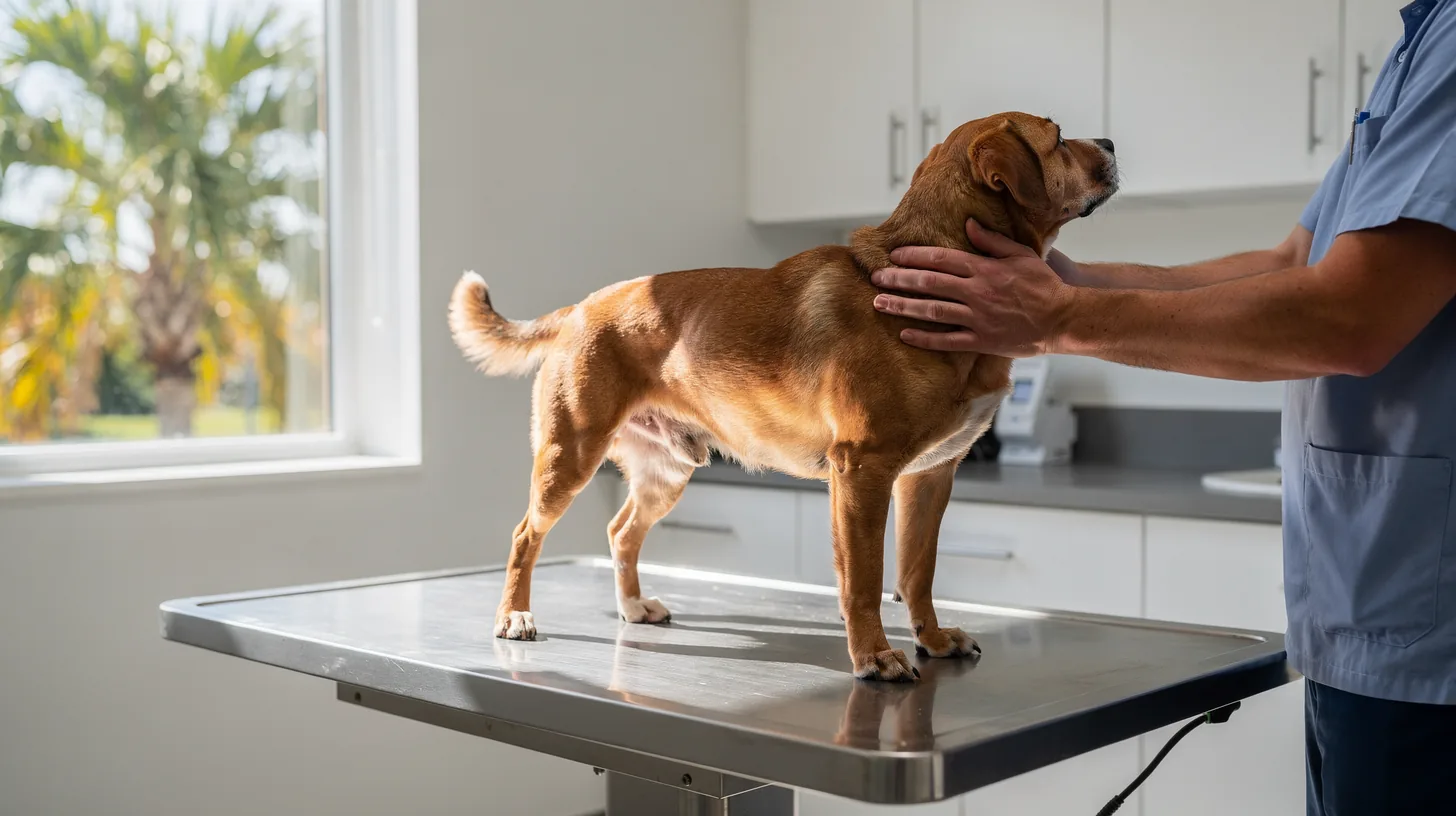
The growth is documented rather than anecdotal. The Punta Gorda metro, which is Charlotte County, grew from 211,456 to 217,212 residents in the year to July 2025, an increase of 2.7 percent, at a time when several nearby Florida metros declined (US Census Bureau, 2026)[1]. That contrast is the whole opportunity. A growing population is not just more people; it is a continuous supply of residents with no established local relationships of any kind.
A relocating pet owner is a distinct kind of prospect. They are not comparison shopping against your reputation in the community, because they have no access to it. They have no neighbor to ask, no history with any clinic, and usually a pet with existing records and an existing condition. They will find their new vet through a search, and they will do it within weeks of arriving.
What makes this segment valuable is its lifetime rather than its transaction. A new resident choosing a clinic is choosing where their animal will be seen for years, including wellness visits, dental work, prescriptions and eventually end-of-life care. Capturing the first visit is capturing the relationship.
Almost no clinic in this market has a page written for that person. The pages that exist describe services, which is what a clinic wants to say, rather than answering what a new arrival is actually asking: are you accepting new clients, how do I transfer records, what does a first visit cost, and can you see us soon.
Pet Owners Search at the Moment of Need, Not in Advance
Veterinary search behavior is event-driven rather than considered. Owners rarely research clinics while everything is fine, then act months later. The search is triggered by something specific and it converts fast, which means visibility has to already exist when the trigger happens. You cannot earn it after the phone comes out.
The general behavior supports this. Some 80 percent of consumers search online for a local business at least once a week, and 32 percent do so daily (SOCi Consumer Behavior Index via BrightLocal, 2024)[2], with 72 percent using Google specifically for local business information (SOCi Consumer Behavior Index via BrightLocal, 2024)[3]. For a category where the search is urgent, being absent at the moment of the trigger is the same as not existing.
The urgency also compresses the comparison. A worried owner is not reading four clinic websites and weighing philosophies of care. They are looking at who is close, who is open, who has recent reviews, and who answers the phone. That set of signals lives almost entirely in the Google Business Profile rather than on your website.
This is why the timing advice for veterinary practices is different from most local categories. There is no season to build toward and no campaign window. The requirement is simply to be continuously present, because the demand arrives at an unpredictable moment and does not wait.
It also means the slow weeks are not slow for marketing purposes. A quiet month in the clinic is the best month to collect reviews and fix pages, because those are the assets that will be doing the work during the week when three emergencies arrive at once.
The Three Demand Events That Produce a First Veterinary Visit
New clients arrive through three distinct triggers, and each one searches differently, converts on a different timeline, and needs its own page. Most clinic websites are built as though there were only one kind of new client. Separating them is the single highest-return content decision available to a practice in this market.
Read this as three different people rather than three keyword variations.
Trigger What they search Decision speed What the page must answer New pet First puppy or kitten visit, vaccination schedules, what to expect Days to weeks What a first visit includes, cost, timing, what to bring New resident Vet near me, accepting new clients, transferring records Weeks of arriving Whether you take new clients, how records transfer, availability Emergency Emergency vet near me, open now, urgent symptoms Minutes Hours, whether you handle emergencies, how to reach a human now
The emergency page deserves the most discipline and usually gets the least. Someone whose animal is in distress needs three facts in the first screen: whether you can see them, when, and what number to call. Everything else, including your history and your team biographies, is an obstacle at that moment. If you do not handle after-hours emergencies, saying so plainly and naming where to go instead is genuinely useful and builds more goodwill than silence.
The new-resident page is the one nobody writes and the one Charlotte County growth makes most valuable. It should state whether you are accepting new clients, explain how to transfer records from an out-of-state practice, and set expectations on how quickly a new client can be seen. That is a short page and it targets a demand event this specific market produces continuously.
The new-pet page converts more slowly but earns the longest relationship, and it is the one most suited to genuinely helpful content, because a first-time owner has many questions and is actively reading rather than panicking.
Your Google Business Profile Decides the Emergency Search
For an urgent veterinary search on a phone, the map pack is the entire decision surface. The owner sees three clinics with distances, hours and ratings, and calls one. The website is frequently never opened at all, which makes the profile the highest-return asset a clinic controls.
The ranking weight is concentrated there. Whitespark 2026 Local Search Ranking Factors report identifies the primary Google Business Profile category as the single most important local ranking factor, with 8 of the top 10 Local Pack factors coming from the profile itself (Whitespark, 2025)[4]. For a clinic that means category selection, service listings, hours and photographs do more for new-client visibility than any page you could publish.
Hours accuracy carries unusual weight in this category because the searches are time-sensitive. A clinic showing as open when it is closed converts a worried owner into a frustrated one, and a clinic showing as closed when it is open loses the call entirely. Some 62 percent of consumers would avoid a business entirely if they found incorrect information about it online (BrightLocal, 2023)[5]. Holiday hours are the most commonly neglected field on any veterinary profile.
Category selection deserves a deliberate decision rather than a default. A general practice that also offers urgent care, dentistry or exotic animal services should set its primary category to what it most wants to be found for and add the others as secondary categories and named services. Clinics routinely choose one broad category and then wonder why the urgent searches go elsewhere.
Keeping this current through a busy stretch is exactly the recurring work that ongoing Google Business Profile optimization covers, and the same profile-first logic applies to the other local healthcare category we cover in our Naples dental practice guide.
Reviews Are the Trust Filter for a Decision Made Under Stress
A pet owner choosing a clinic in an anxious moment leans on reviews more heavily than a buyer in almost any other local category, because the stakes are emotional and the owner has no way to judge clinical quality directly. Recency and volume both gate whether you are considered at all.
The thresholds are strict and they compound. Some 74 percent of consumers specifically seek reviews written in the last three months, and 47 percent will not use a business with fewer than 20 reviews (BrightLocal, 2026)[6]. The rating bar has risen alongside it, with 31 percent saying they will only use a business rated 4.5 stars or above, up from 17 percent, and 68 percent requiring at least 4 stars (BrightLocal, 2026)[7]. Reviews are close to universal in the decision, with 97 percent of consumers reading them for local businesses and consulting an average of six review sites (BrightLocal, 2026)[8].
Responding matters as much as collecting. Some 80 percent of consumers say they are more likely to use a business that responds to all of its reviews (BrightLocal, 2026)[9]. For a veterinary clinic the responses carry extra weight because prospective clients read them looking for how a practice behaves when something went wrong, which is the exact scenario they are frightened of.
A note on difficult reviews, because this category attracts them. Veterinary complaints are frequently about cost or about an outcome nobody could have changed, and both arrive with real grief attached. The response that works is short, warm, non-defensive, and moves the conversation offline. Arguing the clinical facts in public reads badly to every future reader even when the clinic is entirely correct, and prospective clients are judging tone rather than adjudicating the dispute.
The practical mechanism for collecting reviews is asking in person at the end of a good visit, by the person who provided the care, rather than by an automated message days later. The mechanics of why steady volume compounds are covered in our piece on how review volume shapes local rankings.
Why AI Assistants Name So Few Veterinary Clinics
Pet owners increasingly ask an AI assistant to recommend a nearby vet, and assistants name far fewer businesses than the map pack does. Where the local 3-pack surfaces roughly a third of locations for a query set, ChatGPT recommends closer to one percent. Ranking locally no longer guarantees being named in an AI answer.
The adoption is already meaningful. Some 45 percent of consumers used AI tools to find a local business in the past year, up from 6 percent the year before, making AI the third most-used local discovery channel (BrightLocal, 2026)[10]. For the relocating pet owner researching before or just after a move, this channel is disproportionately important, because they have no local knowledge and no one to ask.
The shortlist is short. SOCi 2026 Local Visibility Index, covering more than 350,000 locations, found ChatGPT recommended about 1.2 percent of brand locations against 35.9 percent appearing in the Google local 3-pack, roughly thirty times more selective, with Perplexity at about 7.4 percent and Gemini around 11 percent (SOCi, 2026)[11]. Ratings appear to function as a confidence filter, with ChatGPT-recommended locations averaging 4.3-star ratings (SOCi, 2026)[12].
That connects the AI question straight back to the review work. The same recency and rating that protect your map pack position are what make you eligible to be named by an assistant at all. These are not separate projects competing for the same budget.
What earns the mention beyond ratings is corroboration from sources other than your own site: the state veterinary association listing, the local chamber, rescue and shelter partnerships, community sponsorships, and local press. Those are ordinary community activities for a clinic, and they happen to be the exact signal AI systems weigh. Our guide to how local businesses get cited in AI Overviews covers the full hierarchy.
Be Findable at the Moment It Matters
Veterinary demand does not arrive on a schedule you can plan around, which means the only workable strategy is continuous presence. The clinic that gets the emergency call is the one whose profile was already correct, whose reviews were already current, and whose pages already answered the question before it was urgent.
Work it in order. Audit the Google Business Profile first, starting with the primary category and the hours, because that is where the local weight sits and where urgent calls are decided. Build the review habit second, with a named person responsible for asking at the end of good visits, because recency is what owners filter on and it cannot be manufactured in a crisis. Then separate your emergency, new-client and new-pet pages so each of the three demand events finds a page written for it.
If you do only one thing, make it the new-client page. Charlotte County is producing new residents continuously, they all need a veterinarian, and almost nobody in this market has written the page that says plainly whether you will take them.
To see which of your pages are indexed and which local searches you are currently missing, start with a free SEO audit. If you would rather hand the ongoing work to a team that runs this market, our veterinary SEO services are built for exactly this.
This article is marketing guidance for veterinary practices. It is not veterinary, clinical, or legal advice, and nothing here describes animal care. Results vary by clinic, location, and competitive conditions.
Turn on what makes AI recommend you.
AI recommends the businesses it can read, trust and quote. Flip on the four signals we engineer, and watch your visibility climb and the answer rewrite itself.
Illustrative · the four signals are the real system we build
This article, answered.
The questions readers ask about this topic, answered the way an answer engine would. No forms, no sales pitch.
Pick a question on the left and you’ll get the direct answer, the way an answer engine would give it.
PUBLISHED August 10, 2026 · WRITTEN BY JAMIE KLONCZ, FOUNDER · SEO ELITE AGENCY, NAPLES FL
Enter a path and click verify.