How Port Charlotte Roofing Companies Should Build Their SEO Before Storm Season
Every roofing company in Charlotte County knows the season is coming. Far fewer have pages built, indexed, and trusted before it arrives. The pattern repeats every year: a system develops in the Gulf, the searches start, and the companies that show up are the ones that did the work months earlier. Storm season does not reward the fastest responder. It rewards whoever was already there.

Port Charlotte roofing SEO has to be live and settled before hurricane season opens on June 1, because local rankings take weeks to move and storm-driven searches arrive with no notice. A roofing company that starts optimizing after a storm is competing for visibility it cannot earn in time. The work belongs in the winter and spring, not the week the forecast turns. That is the whole of roofing SEO in a storm market.
Why a Below-Normal Hurricane Forecast Does Not Lower the Stakes
A quiet seasonal forecast is not a reason to postpone roofing SEO. Seasonal outlooks predict basin-wide storm counts, not landfall in any specific county. One hurricane crossing Charlotte County produces the same local search surge whether the season totals four storms or fourteen. Your ranking exposure is local and binary, while the forecast is regional and statistical.
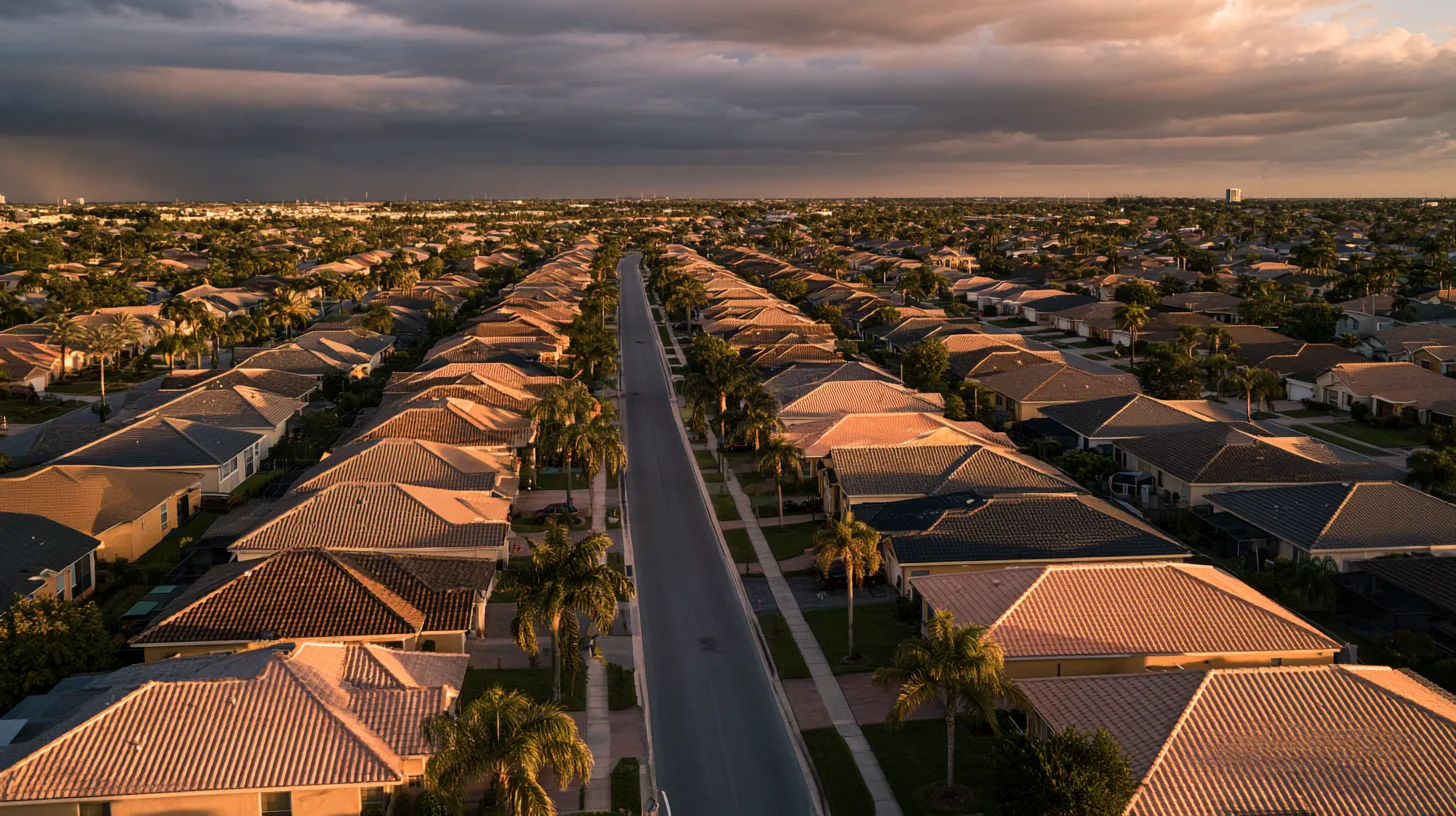
NOAA’s May 2026 outlook called for a below-normal Atlantic season, projecting 8 to 14 named storms, 3 to 6 hurricanes, and 1 to 3 major hurricanes, with a 55 percent chance the season lands below normal (NOAA, 2026)[1]. Read casually, that sounds like a reason to spend the marketing budget elsewhere. Read correctly, it is irrelevant to your planning. A below-normal season that puts one storm over Punta Gorda is, for your business, a heavy season.
This is the reasoning error I see most often in seasonal markets. Owners treat a forecast as a demand prediction for their own service area, when it is a basin-wide count with no geographic resolution at the county level. The correct planning posture is to assume you will need the visibility and to be pleasantly wrong. The cost of being ranked during a quiet season is a few months of content and profile work that keeps producing ordinary repair and replacement leads anyway. The cost of being unranked during an active one is the entire year, and there is no way to recover it after the fact.
Charlotte County also has more roofs to protect each year. The Punta Gorda metro, which is Charlotte County, grew from 211,456 to 217,212 residents in the year to July 2025, a 2.7 percent increase, at a time when several nearby Florida metros declined (US Census Bureau, 2026)[2]. Growth means new construction, new homeowners with no established roofer, and a larger pool of people who will search rather than call someone they already know.
Why Port Charlotte Roofing SEO Has to Be Live Before the Season Opens
Local rankings do not respond on demand. New pages, citations, and reviews need weeks to be crawled, evaluated, and reflected in local results, so work done in one month typically surfaces one or two months later. To rank when hurricane season opens June 1, the pages need to be live and settled by roughly March. Building them in July is building them late.
The lead time is the whole argument, and it is the answer to the question every roofing owner asks first: how fast will this work? For a competitive category like roofing in a storm-exposed county, plan on the full window rather than the optimistic end of it. A roofing company with an established profile and steady reviews will move faster than a new listing entering a crowded market, but neither moves in days.
Working backward is the only sane way to schedule it. Set the target as ranking by June 1, subtract 60 to 90 days, and your real start date is somewhere in March. If you are reading this in August, you are inside the season and the honest advice is different: prioritize the fixes that move fastest, which are almost always the Google Business Profile and reviews rather than new content, and plan properly for the winter build.
There is a second reason to build early that has nothing to do with crawl time. Pages written during a storm are written badly. Copy drafted while your crews are booked solid and the phone is ringing is rushed, thin, and usually duplicated from whatever page you already had. The same page written in February, with a real explanation of your claim process and your service area, is the one that earns the ranking. Seasonal timing is a content quality argument as much as a technical one. The same principle governs the whole regional calendar, which is why we treat seasonal local SEO in Florida as a planning discipline rather than a reactive one.
The Twelve-Month Southwest Florida Roof Demand Calendar
Roof demand in Southwest Florida moves on three overlapping cycles rather than one season: the fixed hurricane window from June 1 to November 30, the snowbird occupancy swell from roughly November through April, and the summer heat and rain cycle that drives ordinary wear claims. Most national roofing SEO advice models a four-season northern market and misses all three.
Here is the month-by-month view. It uses only sourced dates and observable market structure, and it carries no invented demand figures.
Window Months What drives roof search What your SEO should be doing Pre-season build January to March Planning and quotes, snowbird owners on property Publish and index storm pages, fix the profile, build review velocity Season opens April to May Inspection and readiness intent, insurance renewals Pages live and settled, final profile audit Early season June to July Hurricane window opens June 1, early systems, heavy rain Monitor, respond to reviews, keep profile posts current Peak exposure August to October Historic peak of Atlantic activity, emergency and tarp intent Emergency pages must already rank, fast response Season closes November Window closes November 30, snowbird arrival begins Capture post-season repair and replacement intent Snowbird peak December to April Seasonal owners discover damage on arrival Replacement and deferred-repair content
The insight this table encodes is the one that does not appear in national roofing guides. In Southwest Florida, hurricane season and the summer demand trough for most consumer categories run at exactly the same time. For a restaurant, August is dead. For a Port Charlotte roofer, August is the most important month of the year. Any agency applying a generic seasonal calendar to your business will schedule your content backwards.
The second insight is the snowbird overlap. A seasonal owner who arrives in December is often discovering damage from a storm that passed in September, three months after the fact. That produces a real, late-arriving wave of replacement and insurance intent that most roofers never build a page for, because the storm already feels like old news. It is not old news to the person who just walked into the house.
How to Separate Storm Damage, Repair, and Replacement Pages
Storm damage, roof repair, and roof replacement are three separate searches from three different buyers at three different urgency levels. Collapsing them onto one services page forces Google to choose which query the page answers, and it usually chooses none of them well. Each intent needs a dedicated page with its own heading, its own explanation, and its own call to action.
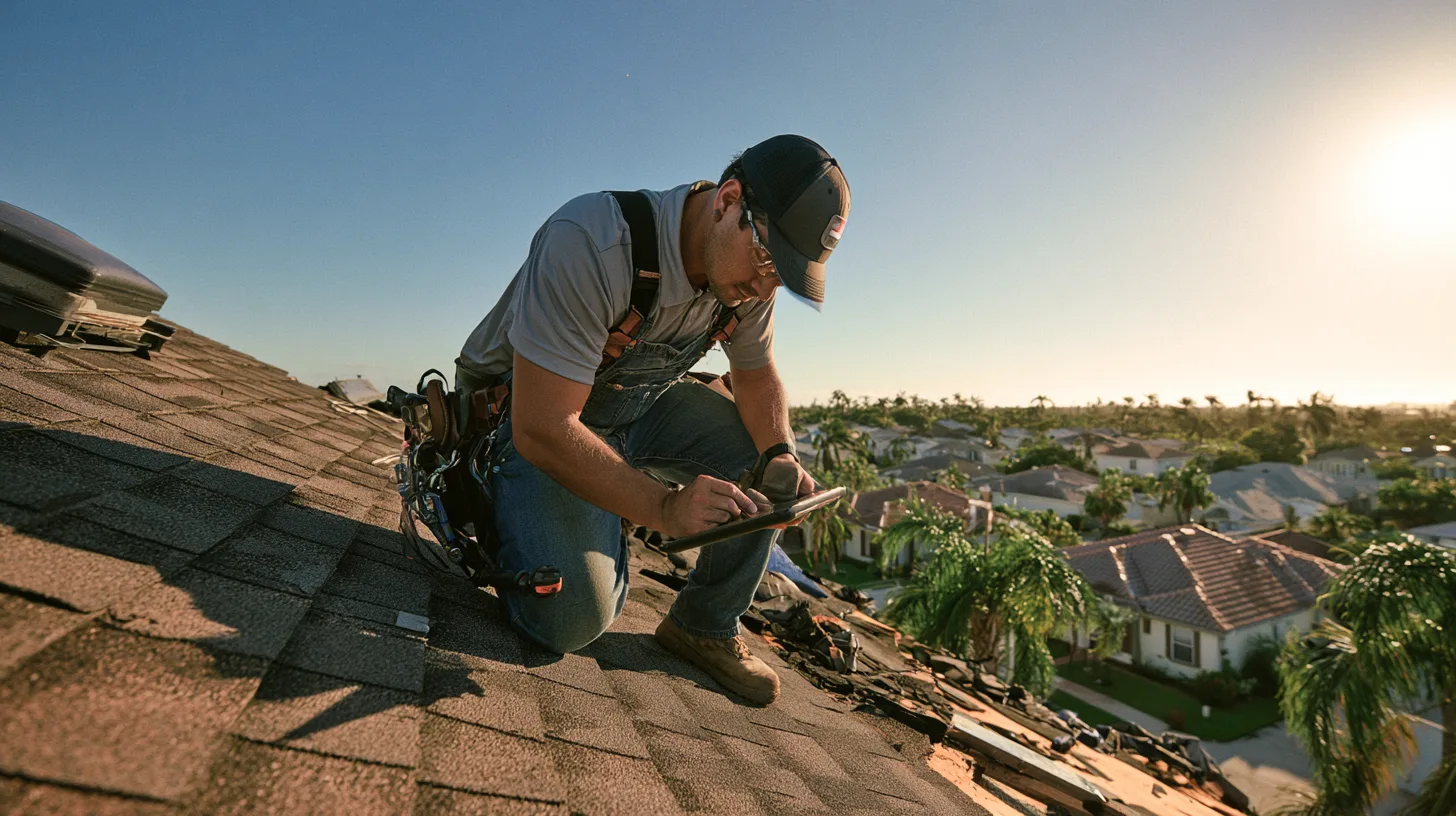
The distinction is about the person, not the keyword. Someone searching for emergency roof repair has water coming in and a decision horizon measured in hours. Someone searching for roof replacement cost in Port Charlotte is comparing options over weeks and wants numbers, materials, and a process. Someone searching for storm damage roof inspection is usually at the very start of an insurance question and does not yet know what they need.
The practical structure that works is a dedicated page per intent, each one genuinely different rather than a keyword swap of the same text. The emergency page should lead with response time, service area, and how to reach a human right now, with everything else stripped out. The replacement page should carry materials, the sequence of a job, what drives cost in a coastal market, and what a homeowner should ask before signing. The storm damage and inspection page should explain what happens after a storm in plain language: what an inspection covers, what gets documented, and what the homeowner needs before speaking to an adjuster.
Interlinking matters as much as separation. The inspection page should lead to both repair and replacement, because that is the real decision sequence a homeowner follows. Each page should link back to your primary roofing SEO services page so the cluster has an obvious center. Without those links, you have three orphans rather than a structure.
What Homeowners Search While an Insurance Claim Is Open
Insurance-claim intent is a distinct and underserved search category in storm markets. Homeowners with an open claim are searching for process explanations, documentation requirements, and second opinions, not for a contractor pitch. Roofing companies that publish clear, honest claim-process content capture this traffic early and hold the relationship through to the job.
This is the largest content gap I see on Southwest Florida roofing sites. Almost every roofer has a page saying they work with insurance. Almost none has a page explaining what actually happens: what the adjuster looks for, why a claim gets partially approved, what supplementing means, what documentation the homeowner should keep, and what the realistic timeline looks like. The homeowner searching those questions at nine in the evening is a genuine future customer, and right now the pages answering them are usually written by public adjusters and national lead brokers rather than by local roofers.
Two constraints matter when you write it. Be accurate about what you can and cannot do, since roofing contractors are not licensed to adjust or negotiate claims on a homeowner behalf, and the line between explaining a process and performing it is one your state licensing rules govern. And do not promise outcomes. A page that explains the process honestly, including the parts that are frustrating, earns more trust than one that implies every claim gets approved in full.
The practical sequence is straightforward. Publish the claim-process explainer before the season, link it from both the storm damage page and the emergency page, and keep it factual rather than promotional. It will earn traffic in the quiet months from homeowners researching old claims, and it will be indexed and trusted by the time a storm makes it urgent.
How Your Google Business Profile Decides Who Gets the Emergency Call
For emergency roofing searches, the Google Business Profile usually decides the outcome before your website is opened. A homeowner searching for emergency roof repair on a phone sees the map pack first, calls from it, and never scrolls. That makes the profile, not the site, the single most decisive asset you control during storm season.
The ranking weight sits where the profile sits. Whitespark 2026 Local Search Ranking Factors report identifies the primary Google Business Profile category as the single most important local ranking factor, with 8 of the top 10 local pack factors coming from the profile itself (Whitespark, 2025)[3]. For a roofing company, that means the category selection, the service area, the hours, and the review profile do more for storm-season visibility than any blog post.
Reviews are the part that cannot be fixed in an emergency, which is exactly why they belong in the winter work. Consumers now look for recency above almost everything else: 74 percent specifically seek reviews written in the last three months, and 47 percent will not use a business with fewer than 20 reviews (BrightLocal, 2026)[4]. The rating threshold has risen alongside it, with 31 percent saying they will only use a business rated 4.5 stars or above, up from 17 percent (BrightLocal, 2026)[5]. A roofer with eleven reviews, none from this year, is filtered out before the comparison starts.
Accuracy is the cheapest win available. Some 62 percent of consumers would avoid a business entirely if they found incorrect information about it online (BrightLocal, 2023)[6]. During a storm, incorrect hours or a stale service area is not a small error. It is the difference between a call and a competitor. If the recurring upkeep is more than your team can hold during season, that is precisely what ongoing Google Business Profile optimization is for, and the mechanics of why steady reviews compound are covered in our piece on how review volume shapes local rankings.
Why AI Assistants Recommend So Few Roofing Companies
AI assistants name far fewer local businesses than the Google map pack does. Where the local 3-pack surfaces roughly a third of locations for a given query set, ChatGPT recommends closer to one percent. Being visible in traditional local search no longer guarantees being named in an AI answer, because the two systems select on different signals.
The selectivity gap is stark. SOCi 2026 Local Visibility Index, covering more than 350,000 locations, found ChatGPT recommended about 1.2 percent of brand locations against 35.9 percent appearing in the Google local 3-pack, making the assistant roughly thirty times more selective, with Perplexity at about 7.4 percent and Gemini around 11 percent (SOCi, 2026)[7]. Consumer adoption has moved just as fast: 45 percent of consumers used AI tools to find a local business in the past year, up from 6 percent the year before (BrightLocal, 2026)[8].
What earns the mention is not what most roofers are told to do. Analysis of AI Overview visibility across 75,000 brands found branded web mentions to be the strongest correlate at 0.664, well ahead of backlinks at 0.218 (Ahrefs, 2025)[9]. For a Port Charlotte roofer, that means being written about, listed, and referenced across local sources matters more than accumulating links. Chamber listings, local news coverage, supplier and manufacturer certification directories, and genuine community presence are the signals that make an assistant confident enough to name you.
Ratings appear to function as a confidence filter as well, with ChatGPT-recommended locations averaging 4.3-star ratings (SOCi, 2026)[10]. That connects the AI question directly back to the review work: the same review velocity that protects your map pack position is what makes you eligible to be named at all. We cover the underlying mechanism in more depth in our guide to why AI search recommends so few local businesses.
Build the Season Before It Starts
The roofing companies that win storm season in Charlotte County are not the ones that respond fastest. They are the ones whose pages were indexed in March, whose Google Business Profile category was correct before June, and whose review profile was current when the first homeowner started searching. None of that can be assembled while your crews are booked and the phone is ringing.
The sequence is straightforward. Fix the profile first, because that is where most of the local ranking weight sits and where emergency calls are actually won. Build the review habit next, because recency is what buyers filter on and it cannot be created on demand. Then separate your storm damage, repair, and replacement pages so each buyer finds the page written for them, and add the insurance claim guide that almost no local roofer has published.
If you are reading this inside the season, do the profile and the reviews now and schedule the content for winter. If you are reading it in January, you have the full runway and there is no reason to spend another season invisible.
Start with a free SEO audit to see which of your pages are indexed, which are competing against each other, and which storm-season searches you are missing entirely. If you would rather hand the seasonal work to someone who runs this market, our roofing SEO services are built around exactly this calendar.
Results vary by market, category, and the condition of your existing profile and website. Roofing contractors should confirm their state licensing requirements before publishing content describing insurance claim processes.
Turn on what makes AI recommend you.
AI recommends the businesses it can read, trust and quote. Flip on the four signals we engineer, and watch your visibility climb and the answer rewrite itself.
Illustrative · the four signals are the real system we build
This article, answered.
The questions readers ask about this topic, answered the way an answer engine would. No forms, no sales pitch.
Pick a question on the left and you’ll get the direct answer, the way an answer engine would give it.
PUBLISHED July 26, 2026 · WRITTEN BY JAMIE KLONCZ, FOUNDER · SEO ELITE AGENCY, NAPLES FL
Enter a path and click verify.