
How Local Restaurants Fill Tables Through Map Pack and Local Search
Restaurant search is the shortest decision cycle in local business. Somebody is hungry, they are already out, and the gap between the search and the table is often under an hour. That compresses everything: the diner will not read your About page, will not compare menus carefully, and will decide from what appears in the map pack. Nearly all of that is decided by assets you control for free and most restaurants leave half-finished.

Restaurant local SEO is the work that puts a restaurant in the Google map pack for nearby and same-hour searches. It runs on the Google Business Profile: correct category, accurate hours, current photos, an up-to-date menu, and steady recent reviews. It is platform-independent, since the profile is owned rather than rented. Most restaurants treat it as a subset of local SEO.
Restaurant Search Is a Same-Hour Decision
Diners search with immediate intent and choose fast. They are not researching for next month; they are deciding where to eat now, usually on a phone, often while already moving. That compresses the decision onto whatever is visible in the map pack, and it means the assets that decide the outcome must be correct before the search happens.
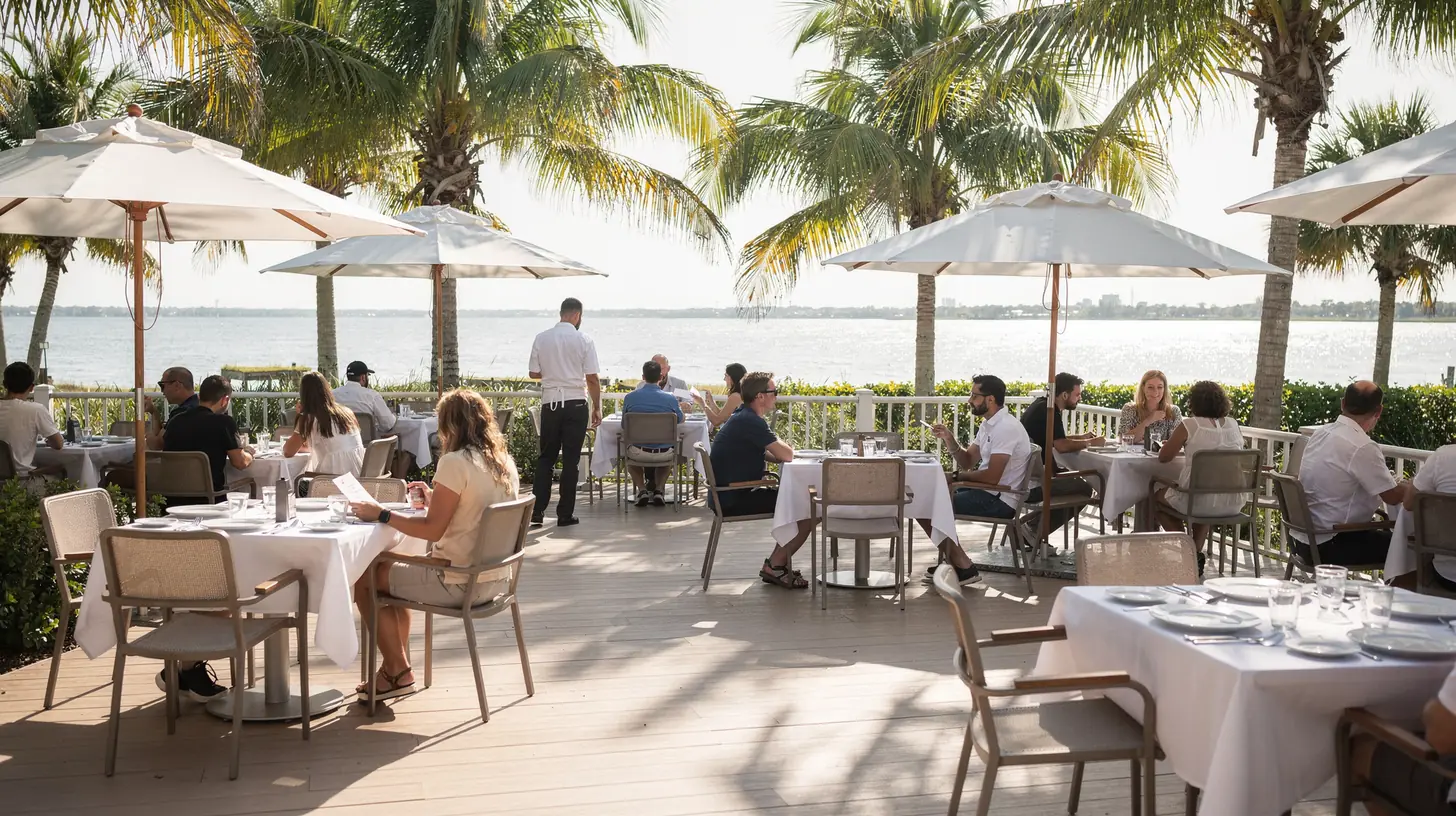
The frequency behind this is continuous rather than seasonal. Some 80 percent of consumers search online for a local business at least once a week, and 32 percent do so daily (SOCi Consumer Behavior Index via BrightLocal, 2024)[1], with 72 percent using Google specifically for local business information (SOCi Consumer Behavior Index via BrightLocal, 2024)[2]. Restaurants sit at the high-frequency end of that behavior.
The compression has a specific consequence: your website is largely not part of the decision. The diner sees a shortlist with photos, ratings, distance and an open or closed label, and picks. If they touch your site at all it is usually to check the menu or find parking, and if either takes more than a few seconds they go back and choose a different restaurant.
That reframes where the work belongs. Most restaurant marketing effort goes into the website and social posts, while the assets actually deciding the outcome are the profile fields, the photographs and the review recency. Those are free, and they are where the return sits.
It also means errors are expensive in a way they are not for slower categories. A dentist with wrong holiday hours loses a call that may come back tomorrow. A restaurant with wrong hours on a Saturday night loses the covers permanently and probably earns a bad review from someone who drove there.
Your Google Business Profile Is the Restaurant, as Far as Search Is Concerned
For a nearby restaurant search, the profile is not a listing that points at your business. It effectively is your business: the photos, hours, rating, menu and category are what the diner evaluates, and most of the local ranking weight sits there rather than on your website.
The weighting is documented. Whitespark 2026 Local Search Ranking Factors report identifies the primary Google Business Profile category as the single most important local ranking factor, with 8 of the top 10 Local Pack factors coming from the profile itself (Whitespark, 2025)[3]. For a restaurant, category precision matters more than most owners assume. A place that is genuinely a seafood restaurant should not be sitting under the generic restaurant category, because the specific searches are where the intent and the lower competition both are.
Hours accuracy is the highest-stakes field on any restaurant profile, and it is the most frequently wrong. Holiday hours, seasonal hours, kitchen closing times that differ from bar closing times, and a temporary closure nobody updated all produce the same outcome. Some 62 percent of consumers would avoid a business entirely if they found incorrect information about it online (BrightLocal, 2023)[4]. For a same-hour decision, incorrect hours is not an inconvenience, it is a lost cover and often a one-star review.
Photographs do work here that they do not do in other categories, because food is the product and the diner is buying an experience they can partly see in advance. Current photographs of the actual food you currently serve, the actual room and the actual exterior so people can recognize it from the street, outperform professional shots of dishes you removed from the menu two years ago.
Keeping all of that current through a season is exactly the recurring work that ongoing Google Business Profile optimization exists to handle, and the ranking mechanics are covered in our guide to optimizing the Google map pack.
The Map Pack Readiness Checklist
Most published restaurant SEO advice comes from ordering platforms with a product to sell. This checklist is deliberately platform-neutral: every item is something a restaurant can complete itself, this week, without buying software. Work down it in order, because the earlier items carry more weight than the later ones.
Run this as an audit rather than a project. Most restaurants find three or four items already broken.
Item What good looks like Why it decides the search Primary category The most specific accurate type, not generic restaurant Single largest local ranking factor Hours Regular, holiday and seasonal hours all current Wrong hours lose the cover and earn a bad review Photos Current food, room and street-view exterior The diner is buying something they can partly see Menu Current, readable on a phone, text not a PDF image Menu check is the one site visit that happens Review recency New reviews arriving continuously, not in bursts Diners filter hard on how recent reviews are Review responses Every review answered, briefly and without arguing Responding lifts willingness to choose you Ordering link Points where you want the order to go Decides whether the order is owned or commissioned
The menu item deserves emphasis because it is the one moment the diner does visit your site. A menu published as a scanned PDF or a flat image is unreadable on a phone, invisible to search engines, and inaccessible to anyone using a screen reader. A menu in real text solves all three at once and is one of the highest-return hours available to a restaurant.
The ordering link is the item with the clearest financial consequence. Whatever your ordering link points at is where the orders go, and third-party platforms take a commission on each one while your own ordering page does not. If you take orders directly, that link should point at your own page, and the profile is the highest-traffic place that decision gets made.
Review Recency Decides Whether You Are Considered
Restaurant reviews age faster than reviews in any other local category, because diners reasonably assume a kitchen can change in months. A strong rating built two years ago carries much less weight than a steady flow of recent reviews, and the volume threshold gates whether you are shortlisted at all.
The filters are strict and they stack. Some 74 percent of consumers specifically seek reviews written in the last three months, and 47 percent will not use a business with fewer than 20 reviews (BrightLocal, 2026)[5]. The rating bar has risen too, with 31 percent saying they will only use a business rated 4.5 stars or above, up from 17 percent, and 68 percent requiring at least 4 stars (BrightLocal, 2026)[6]. Reviews are effectively universal in the decision, read by 97 percent of consumers who consult an average of six review sites (BrightLocal, 2026)[7].
Responding is the underused half. Some 80 percent of consumers say they are more likely to use a business that responds to all of its reviews (BrightLocal, 2026)[8]. For restaurants this is unusually visible, because bad restaurant reviews are read closely and the response is read more closely than the complaint.
The response that works is short, specific enough to show you actually read it, non-defensive, and free of the phrase we are sorry you feel that way. Arguing with a diner about whether the fish was fresh persuades nobody and every future reader is judging your temperament rather than the fish.
The collection mechanism that works in a restaurant is different from other categories, because there is no follow-up appointment to ask at. It has to happen at the table or on the receipt, and it has to be a genuine ask from a person rather than a printed line nobody reads. In a seasonal market the discipline matters even more, since a season of reviews followed by five quiet months reads as a restaurant that may have closed.
Reducing How Much of Your Volume You Rent
Third-party ordering and reservation platforms bring real volume and take a commission on it. Local search is the main channel through which a restaurant can shift some of that volume to orders it owns, because the profile and the pack sit upstream of the platform in the diner journey.
The structural point is about sequence rather than about the platforms being bad. A diner searching for food near them sees the map pack first. What happens next depends on where your links point. If your profile routes them to your own ordering page or your own reservation flow, that order is yours. If it routes them to a marketplace, the commission applies and the customer relationship belongs to the platform.
Owning the search position is what makes the choice available. A restaurant that is invisible in local search has no leverage at all, because the platform is the only route customers have to it. A restaurant that ranks can decide how much volume to send through the platform and how much to keep, and can treat the platform as incremental rather than as the whole pipeline.
The practical steps are unglamorous. Point the ordering and reservation links on your profile where you want the volume to go. Make your own ordering page work properly on a phone. Put the menu in real text. Ask in person for the review that improves the profile that produces the next search.
None of this requires leaving the platforms, and for many restaurants that would be a bad idea. It requires not letting rented volume be the only volume you have, which is the same owned-versus-rented logic that applies across local marketing.
Why AI Assistants Recommend So Few Restaurants
Diners increasingly ask an AI assistant where to eat, and assistants name a far shorter list than the map pack does. Where the local 3-pack surfaces roughly a third of locations for a query set, ChatGPT recommends closer to one percent, and ratings appear to act as the filter deciding who makes the cut.
The behavior has already shifted. Some 45 percent of consumers used AI tools to find a local business in the past year, up from 6 percent the year before, making AI the third most-used local discovery channel (BrightLocal, 2026)[9]. Visitors and seasonal residents lean on it heavily, because they are choosing in an unfamiliar place with no habits to fall back on.
The shortlist is short. SOCi 2026 Local Visibility Index, covering more than 350,000 locations, found ChatGPT recommended about 1.2 percent of brand locations against 35.9 percent appearing in the Google local 3-pack, with Perplexity at about 7.4 percent and Gemini around 11 percent (SOCi, 2026)[10]. Ratings look like the confidence filter, with ChatGPT-recommended locations averaging 4.3-star ratings (SOCi, 2026)[11].
For restaurants that last figure is the actionable one, because it ties the AI question directly to the review work already on the checklist. A restaurant sitting at 4.1 with stale reviews is not going to be named, and the fix is the same fix that improves the map pack position.
Beyond ratings, what earns the mention is being written about somewhere other than your own website: local food press, community coverage, event listings, genuine mentions by people who are not you. Our guide to how local businesses get cited in AI Overviews covers the full hierarchy of those signals.
Fix the Profile Before Anything Else
A restaurant with a precise category, correct hours, current photos, a readable menu and recent reviews will outperform a restaurant with a better website and none of those things. The profile is where the same-hour decision is made, and every item that decides it is free.
Run the checklist this week rather than planning a project. Category first, because it carries the most weight. Hours second, including holidays, because that is the error with the worst consequence. Photos and the text menu third. Then set a review habit that runs continuously rather than in bursts, and answer every review briefly.
If you do one thing today, check your holiday hours and your ordering link. One of those costs you covers this month and the other decides who owns your orders.
To see how your profile and pages currently stand against nearby competitors, start with a free SEO audit. If you would rather have the ongoing profile and review work handled, our restaurant SEO services cover exactly this list.
Results vary by location, cuisine, competitive density and the current condition of your profile and reviews. Nobody controls Google rankings or AI recommendations, and any provider guaranteeing either is describing something outside their control.
Turn on what makes AI recommend you.
AI recommends the businesses it can read, trust and quote. Flip on the four signals we engineer, and watch your visibility climb and the answer rewrite itself.
Illustrative · the four signals are the real system we build
This article, answered.
The questions readers ask about this topic, answered the way an answer engine would. No forms, no sales pitch.
Pick a question on the left and you’ll get the direct answer, the way an answer engine would give it.
PUBLISHED August 10, 2026 · WRITTEN BY JAMIE KLONCZ, FOUNDER · SEO ELITE AGENCY, NAPLES FL
Enter a path and click verify.