
How Venice and North Port Real Estate Agents Generate Their Own Search Leads
A portal lead is rented. You pay for it, you share it with three other agents, and the moment you stop paying it disappears. A search lead is owned: the page keeps working, the enquiry comes to you alone, and the cost per lead falls every month it stays ranked. For an agent in Venice or North Port, the raw material for those pages is something you already have and the portals do not, which is actual knowledge of the neighborhoods.

Venice real estate SEO is how an individual agent earns buyer and seller enquiries directly from search rather than buying shared portal leads. It works through neighborhood-level pages, a claimed Google Business Profile, and review recency. The advantage over a national portal is specific local knowledge that cannot be syndicated. Agents usually pair it with broader real estate SEO across their service area.
Portal Leads Are Rented and Search Leads Are Owned
The economics of the two lead sources diverge over time rather than at the point of purchase. A portal lead has a fixed cost that recurs forever and is typically sold to several agents at once. A page that ranks has a one-time production cost and then produces enquiries that belong to you alone, at a cost per lead that keeps falling.
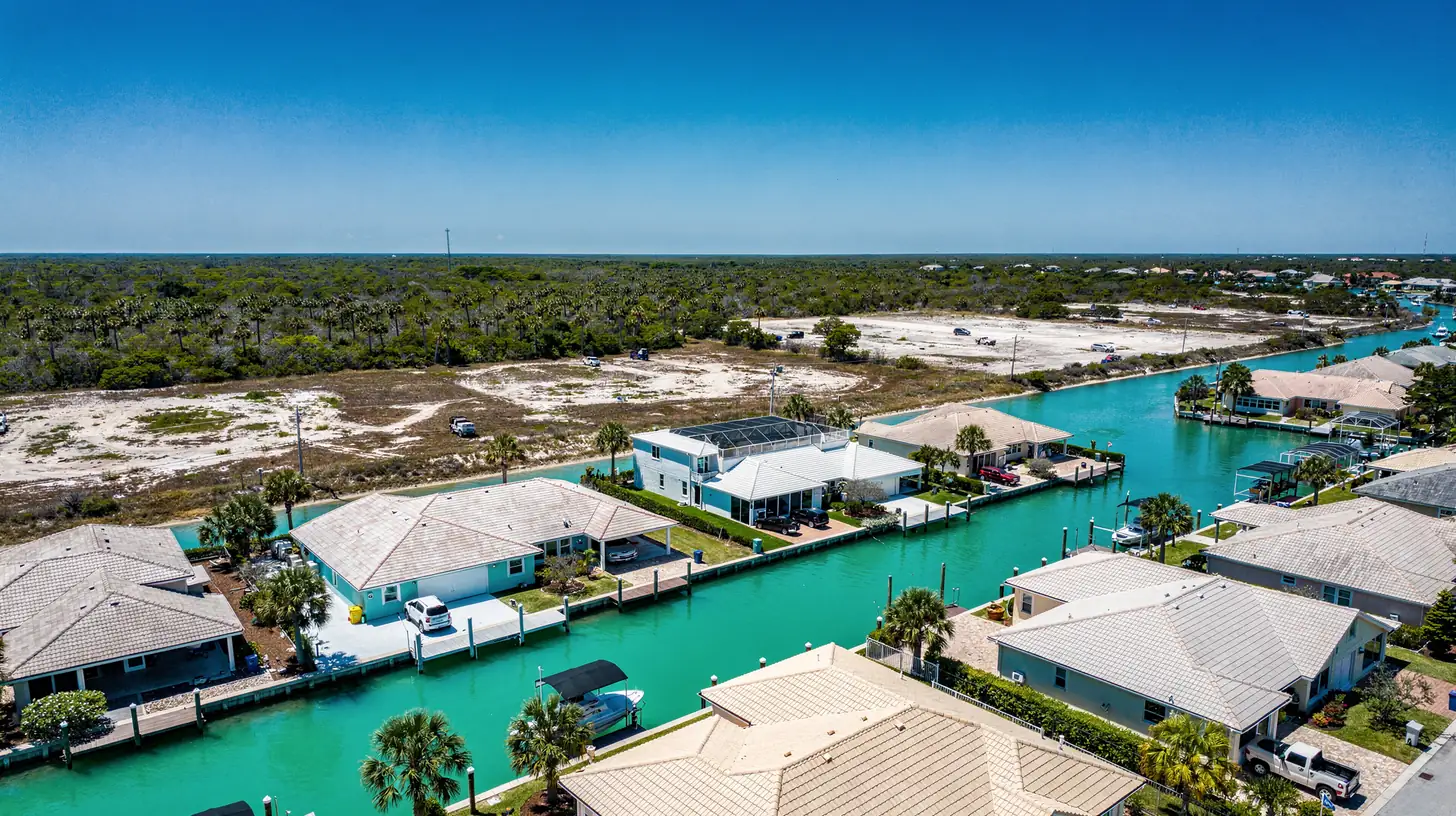
The comparison people usually make is a price comparison, and that is the wrong frame. The real difference is exclusivity and durability. A shared lead means you are competing on response speed with agents who received the same enquiry at the same moment, which turns your business into a dialing contest. A search lead arrives already convinced enough to seek you out, and nobody else got it.
The durability point matters more in a market with seasonal swings. Portal spend has to continue through the quiet months or the pipeline stops immediately. A ranked neighborhood page keeps producing through the summer at no additional cost, which is exactly when a Gulf coast agent most needs something working in the background.
None of this argues that portals are useless. They are a reasonable way to buy volume quickly, particularly for a newer agent with no digital footprint. The mistake is treating rented volume as a substitute for building anything of your own, because after five years of portal spend you own precisely nothing.
The demand is continuous rather than seasonal. Some 80 percent of consumers search online for a local business at least once a week and 32 percent do so daily (SOCi Consumer Behavior Index via BrightLocal, 2024)[1], with 72 percent using Google specifically for local business information (SOCi Consumer Behavior Index via BrightLocal, 2024)[2].
How Buyers Actually Search This Corridor
Buyers moving into the Venice and North Port corridor do not search the way agents write. They search for named neighborhoods, communities and conditions rather than for agents, and they do it long before they are ready to talk to anybody. The pages that capture them answer questions about places, not questions about representation.
The vocabulary gap is the whole opportunity. An agent writes a page about buying a home in Venice. The buyer searches for a specific named community, whether a neighborhood floods, what the fees cover, how far it is to a beach, or what the difference is between two developments they are weighing against each other. Those are place questions, and the person answering them credibly is positioned as the local expert before any conversation starts.
This is also where an individual agent can beat a national portal outright. A portal has listings and data at scale but no genuine knowledge of what it is actually like to live in a specific community, what the fee structure really covers, or which streets flooded and which did not. You have that. It is the one asset that cannot be syndicated, and almost nobody publishes it.
The relocating buyer is the highest-value version of this reader. They are researching from another state with no local contacts, they cannot drive the neighborhoods, and they are relying entirely on what they can read. An agent whose pages answer their actual questions is frequently the only agent they ever contact.
Timing favors patience here. Property research runs months ahead of a transaction, which means the pages you publish now are being read by people who will transact later. That is a poor fit for a quarterly target and an excellent fit for a business built to last, and it is the same compounding logic we describe for other Sarasota County businesses in our Sarasota service business guide.
The Neighborhood Content Map
Instead of one page about the area, build a map of pages, one per named community, each answering the questions a buyer asks about that specific place. This is the single highest-return content structure available to an individual agent, because it matches how buyers search and it is the material portals cannot replicate.
Work through it community by community rather than trying to cover the corridor in one document.
Page type What the buyer is asking What only a local agent can supply Named community guide What is it actually like to live here Layout, character, who tends to buy there, how it has changed Fees and structure What do the fees cover and what do they not What is included, how it is billed, what surprises buyers Community comparison How does this one differ from that one Honest trade-offs between two similar options Flood and insurance context What should I check before I buy here Which questions to ask, what documentation to request Relocation practicalities How do I buy from out of state Sequence, timing, what can be done remotely
The comparison pages are the most valuable and the least written. A buyer weighing two communities against each other is deep in the decision, and the page that lays out the honest trade-offs earns disproportionate trust precisely because it does not pretend one option is perfect. Writing that a community has higher fees but better maintenance, or is quieter but further from the beach, reads as advice rather than marketing.
On flood and insurance, be careful to be genuinely useful without overstepping. You can explain what a buyer should check, what documents to request, and which questions to put to an insurer or the county. Making specific representations about a property risk profile or an insurance outcome is a different matter and belongs with the appropriate licensed professional.
The practical build order is to start with the three communities you actually know best and write those properly, rather than producing thin pages for twenty. A page that demonstrates real knowledge outperforms ten that read like a directory listing.
What You Can and Cannot Say About a Neighborhood
Fair housing rules govern this content, and the industry guidance most agents have absorbed is more restrictive than the law itself. Steering is illegal and remains so. But federal housing regulators stated in 2026 that truthfully answering questions about crime data or school quality does not by itself violate the Fair Housing Act, which is not what most agents have been told.
Start with what is genuinely prohibited, because it has not changed. The Fair Housing Act bars statements made in connection with the sale or rental of a dwelling that indicate a preference or limitation based on protected characteristics, and steering, meaning directing prospective buyers toward or away from areas on the basis of a protected characteristic, is intentional discrimination. Descriptions that function as proxies for protected characteristics carry real risk. That is the line, and it is a serious one.
What has been widely misunderstood is the scope. In a Dear Colleague Letter dated April 24, 2026, the Assistant Secretary for Fair Housing and Equal Opportunity wrote that real estate agents and brokers do not violate the Fair Housing Act merely by discussing with prospective homebuyers or renters the prevalence of crime or the quality of schools in neighborhoods, and stated that the Act does not categorically restrict realtor speech on crime rates or school quality (HUD Office of Fair Housing and Equal Opportunity, 2026)[3]. The same letter described trade association guidance instructing agents not to answer such questions as an inaccurate representation of the Act.
Three qualifications matter before you act on that. It is a statement of a federal agency enforcement position carrying a specific date, not a court ruling and not a change to the statute. Steering remains prohibited regardless, so the distinction is between truthfully answering a question a client asked and directing people toward or away from areas. And a Realtor is separately bound by the National Association of Realtors Code of Ethics and by state law, which impose their own obligations independent of what HUD says about the Act.
The practical implication for your content is narrower than it first appears, and it is mostly about posture. Write about places factually and let the buyer draw conclusions. Point to primary sources such as county and school district data rather than characterizing a neighborhood in your own adjectives. Avoid language describing who lives somewhere or who would fit in, which is where the genuine exposure sits. Answer questions rather than making recommendations about where a particular buyer belongs.
This is marketing guidance, not legal advice. Fair housing obligations vary by state and by association membership, and enforcement positions can change. Confirm your neighborhood content policy with your broker and with counsel qualified in fair housing law before publishing.
A Google Business Profile Is an Individual Agent Asset
Most agents assume the Google Business Profile belongs to the brokerage. An individual agent can generally maintain a profile for their own practice, and doing so is often the fastest local visibility available, because most of the ranking weight in local search sits in the profile rather than on a website.
The weighting is well established. Whitespark 2026 Local Search Ranking Factors report identifies the primary Google Business Profile category as the single most important local ranking factor, with 8 of the top 10 Local Pack factors coming from the profile itself (Whitespark, 2025)[4]. For an agent competing against brokerages with far larger websites, that is the most level ground available.
Accuracy carries the usual weight. Some 62 percent of consumers would avoid a business entirely if they found incorrect information about it online (BrightLocal, 2023)[5]. For an agent, the most common errors are a service area that does not match where you actually work and contact details pointing at a brokerage switchboard rather than at you.
Reviews are where an individual agent can decisively out-compete a large firm, because your clients have a personal relationship with you and a transaction they remember. The thresholds are strict: 74 percent of consumers specifically seek reviews written in the last three months and 47 percent will not use a business with fewer than 20 reviews (BrightLocal, 2026)[6], with 31 percent using only businesses rated 4.5 stars or above, up from 17 percent (BrightLocal, 2026)[7]. Reviews are close to universal in the decision, read by 97 percent of consumers across an average of six review sites (BrightLocal, 2026)[8].
The recency rule is the one that catches agents. A strong year in 2024 followed by nothing since reads as a practice that has gone quiet. Asking every closing client at the moment the keys change hands, in person, is worth more than any automated sequence. Keeping the profile itself current through a busy season is what ongoing Google Business Profile optimization handles, and the pack mechanics are covered in our guide to optimizing the Google map pack.
Why AI Assistants Rarely Name an Individual Agent
Buyers relocating from out of state increasingly ask an AI assistant to recommend an agent or explain a neighborhood, and assistants name very few businesses. Portals and large brokerages dominate those answers because they carry the corroboration signals AI systems weigh. An individual agent is not locked out, but the route in is specific.
The channel is already material. Some 45 percent of consumers used AI tools to find a local business in the past year, up from 6 percent the year before, making AI the third most-used local discovery channel (BrightLocal, 2026)[9]. For relocating buyers researching a corridor they have never visited, it is disproportionately important, because they have no local contacts to ask.
The selectivity is severe. SOCi 2026 Local Visibility Index, covering more than 350,000 locations, found ChatGPT recommended about 1.2 percent of brand locations against 35.9 percent appearing in the Google local 3-pack, with Perplexity at about 7.4 percent and Gemini around 11 percent (SOCi, 2026)[10]. Ratings appear to work as a confidence filter, with ChatGPT-recommended locations averaging 4.3-star ratings (SOCi, 2026)[11].
The realistic goal for an individual agent is not to be named when someone asks for the best agent in Florida. It is to be the source cited when someone asks a specific question about a specific community, which is a far narrower query with far less competition and a much more qualified reader behind it. That is precisely what the neighborhood content map is built to win.
What earns it is corroboration beyond your own site: the local association listing, community involvement, local press, and genuinely useful pages other people reference. Our guide to how local businesses get cited in AI Overviews covers the full signal hierarchy.
Build the Asset You Keep
Portal spend buys volume now and leaves nothing behind. Neighborhood pages, a claimed profile and current reviews take longer and then keep producing without further cost. For an agent planning to still be working this corridor in five years, the second one compounds and the first one does not.
Start narrow. Claim and complete the Google Business Profile this week, because it is the fastest-moving asset and the most level ground against larger competitors. Set a review habit tied to closings rather than to a calendar reminder. Then write the three community pages you know best, properly, before adding any more.
Keep the fair housing posture consistent from the first page: factual descriptions of places, primary sources rather than your own adjectives, questions answered rather than recommendations about where someone belongs, and a policy agreed with your broker before anything publishes.
To see which pages are currently indexed and which neighborhood searches you are missing, start with a free SEO audit. If you would rather have the content map built and maintained for you, our real estate SEO services are structured around exactly this.
This article is marketing guidance for real estate professionals. It is not legal advice and makes no representation about lead volume, transaction outcomes, or income. Fair housing obligations vary by state and association; confirm your content policy with your broker and qualified counsel.
Turn on what makes AI recommend you.
AI recommends the businesses it can read, trust and quote. Flip on the four signals we engineer, and watch your visibility climb and the answer rewrite itself.
Illustrative · the four signals are the real system we build
This article, answered.
The questions readers ask about this topic, answered the way an answer engine would. No forms, no sales pitch.
Pick a question on the left and you’ll get the direct answer, the way an answer engine would give it.
PUBLISHED August 10, 2026 · WRITTEN BY JAMIE KLONCZ, FOUNDER · SEO ELITE AGENCY, NAPLES FL
Enter a path and click verify.